


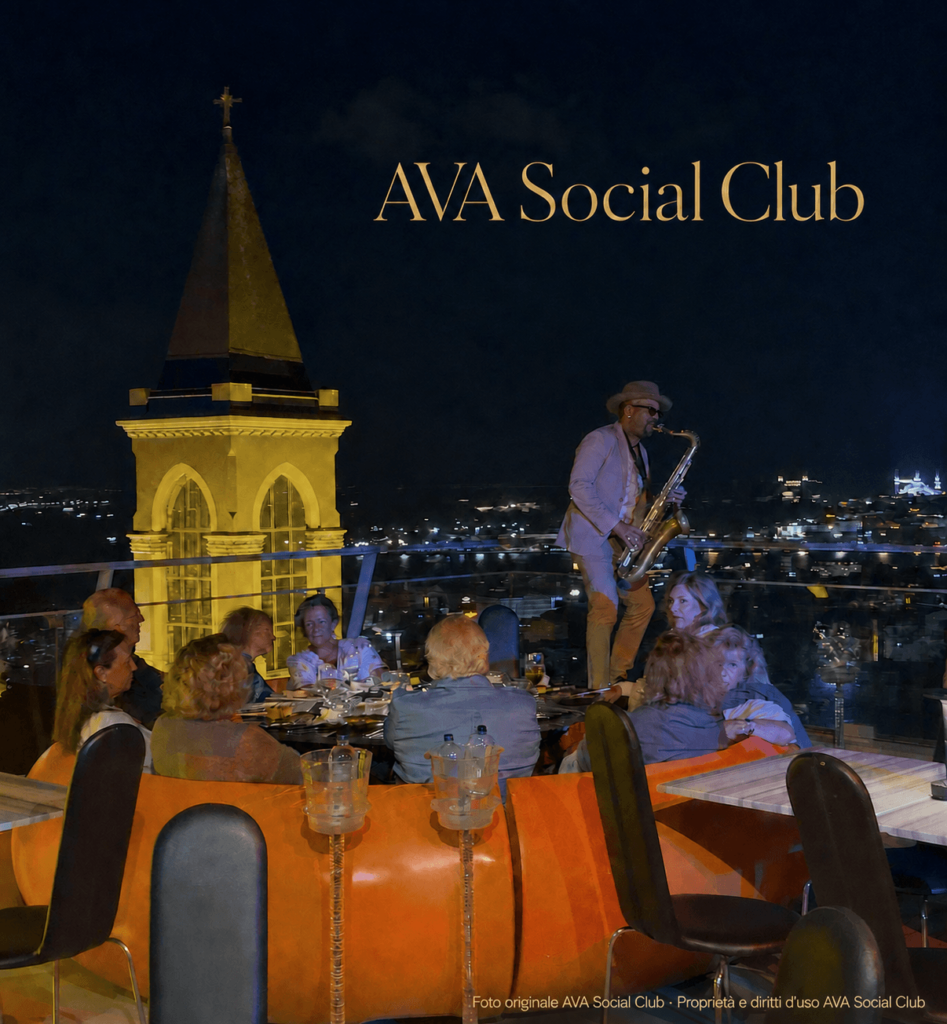

Making friends as an adult is no longer an automatic process. The rise of social clubs, in-person gatherings and curated communities points to a clear demand: access to situations genuinely worth showing up for.
Making friends as an adult has become a question of access. The desire to meet new people has not diminished; many of the mechanisms that once made encounters frequent and natural have.
A recent Guardian article documents the growth of services dedicated to in-person socialising in the UK. The individual models matter less than the economic and cultural signal: a previously dispersed demand is becoming visible, organised and willing to pay.
This is neither a British peculiarity nor a passing trend. It is the consequence of a change in the way we live, work and build relationships in adulthood.
From connection to presence
Technology has multiplied our contacts, but it has not solved our need for presence. We can reach almost anyone and still have few opportunities to genuinely share a space, an activity or a conversation.
That is why dinners for people who have never met, book groups, cultural visits, themed tables and clubs built around shared interests are becoming relevant again. Digital tools remain useful for discovery and coordination; value is created when people meet.
The shift is clear: from unlimited access to contacts to the search for recognisable social experiences. It is not enough for an event simply to exist. It must offer a compelling reason to leave home, invest time and introduce ourselves to someone we do not yet know.
Why making friends as an adult is more difficult
For decades, social networks formed in the places of everyday life: school, work, the neighbourhood and the family. The continuity of these environments created repeated encounters and reduced the distance between strangers.
Today, that informal infrastructure is more fragile. We move between cities and jobs, work remotely, and experience separations and changing family structures. Single-parent households and the number of people living alone are increasing.
Data from Istat make the transformation clear: in 2024–2025, 37.1% of Italian households consisted of one person, compared with 25.9% twenty years earlier; around one household in ten was headed by a single parent. For decades, social networks formed in the places of everyday life: school, work, the neighbourhood and the family. The continuity of these environments created repeated encounters and reduced the distance between strangers.
Today, that informal infrastructure is more fragile. We move between cities and jobs, work remotely, and experience separations and changing family structures. Single-parent households and the number of people living alone are increasing.
Data from Istat make the transformation clear: in 2024–2025, 37.1% of Italian households consisted of one person, compared with 25.9% twenty years earlier; around one household in ten was headed by a single parent. This is not merely a demographic shift. It means that a growing share of the population cannot rely on traditional structures to sustain a social life.
Long-standing relationships change too: some remain central, some become less frequent, while others belong to a chapter that has ended. The result is a distinctly contemporary paradox: full calendars and extensive networks do not guarantee places where we can meet people who are compatible with who we are today.
Non è solo demografia. It means that a growing share of the population cannot rely on traditional structures to sustain a social life.
Long-standing relationships change too: some remain central, some become less frequent, while others belong to a chapter that has ended. The result is a distinctly contemporary paradox: full calendars and extensive networks do not guarantee places where we can meet people who are compatible with who we are today.
Meeting new people after 50
After 50, social life does not become less important; it becomes more discerning. Our available time carries greater value, and participation requires a concrete reason.
A separation, a move or a professional change can rapidly reshape habits and points of reference. At the same time, experience and autonomy make our interests clearer and situations without a distinct identity less acceptable.
This is where generic offerings reveal their limits. An event designed for “everyone” often speaks to no one: it does not clarify whom we will meet, what will bring us together or why the experience should continue beyond that evening.
The emerging demand is not for a busier calendar. It is for the ability to choose coherent, understandable and thoughtfully composed situations in which meeting others is not left entirely to chance.
A more independent way of living adulthood
In Italy, a growing segment of the population is living adulthood with greater independence than in the past.
These are women and men who organise their daily lives on their own terms, pursue interests, travel, take part in new experiences and continue to broaden their personal horizons. Some live with a partner; others live alone. What unites them is not their relationship status, but the desire to maintain an active, open and socially engaging life.
Living independently does not mean choosing isolation. On the contrary, it makes the need to build relationships and create opportunities to meet beyond familiar circles even more apparent.
This change is particularly visible after 50. More people control their own time, make decisions independently and seek experiences aligned with who they have become. They do not want to fill a diary or be placed into generic categories. They want to know why they should participate, what kind of setting they will find and with whom they might share the experience.
This adult population is already substantial and continues to grow. What is missing is not demand, but an offer capable of understanding its behaviours, expectations and willingness to invest in high-quality social experiences.
People who lead independent lives and want to meet others are not exceptions. They are part of one of the most significant changes shaping contemporary adult society.
The value of a thoughtfully curated context
The new demand for social connection is not only about wanting to meet people. It is about how we expect that meeting to happen.
Not indistinct occasions that we attend hoping to enjoy ourselves, but recognisable situations built around a shared reason: a cultural interest, a conversation, an experience, a project or a table composed with care.
Being in the same place does not automatically create a relationship. A well-designed context can, however, reduce the initial distance and make it more natural to start talking.
We are accustomed to paying for access to a gym, a cultural club, a course, an organised trip or a workspace. Yet when it comes to social connection, we still tend to believe that everything should happen free of charge and by chance.
Creating a high-quality context, however, requires work.
A dinner, a cultural visit, a short trip or a Sunday brunch can be nothing more than an event. Or it can become a carefully curated occasion where people know they have not arrived entirely by chance.
What are we willing to pay for?
We are not paying for access to strangers. We are paying for a system designed to improve the quality of connections.