


After the age of 55, a new phase of life begins. The real question is: who do we share it with — and how?
We are not entering an “after.” We are entering a new form of adulthood. A stage where time changes value: it becomes freer, more conscious. Not necessarily easier, but more intentional.
There is a phrase that captures our era well: the good, active part of life is getting longer.
And when life extends, priorities shift — and so do the questions. Above all one: what quality and meaning do I want to give to the time ahead of me?
1) A deep shift: social change is already here
We are living through a structural transition. Active life expectancy is increasing, traditional social networks are evolving, and each person reaches this stage with a different story behind them — choices, transitions, new beginnings.
Within this landscape, a clear need is emerging:
mature, aware and vital adults are looking for new ways to experience social life.
They are often curious, educated, open-minded people who want to continue living with meaning and direction, without adapting to outdated models.
Yet precisely at the moment when time finally becomes “our own,” something essential is often missing:
a peer context where we can recognize ourselves and feel a sense of belonging.
2) The problem isn’t “being alone”; it’s not having a coherent context
This is not simply an individual issue. It is a contextual one.
Today it is common to live more independently, with social networks that are less stable and more fragmented. Opportunities to meet people exist — but they are often:
- random
- too generic
- not respectful of people’s time
- poorly designed to create real affinity
The result is familiar: people go out, talk, meet others — but rarely feel truly recognized.
3) Adult social life evolves: less quantity, more quality
At a certain point in life, we are no longer looking for “more.” We are looking for better.
Time becomes more valuable, and energy is invested differently: in what nourishes rather than what disperses.
For adult social life to work, three elements are essential:
- context (the right settings)
- being among peers — a shared stage of life
- care (respect and quality)
Without these ingredients, even the best intentions fade.
4) Belonging: the missing word
Belonging does not mean closing ourselves off. It means recognizing ourselves in a place and among people.
It means feeling that you don’t need to explain yourself too much, adapt to noisy dynamics, or “perform” socially.
It is a subtle yet powerful feeling:
being in the right place, with the right people, at the right moment.
This is what AVA aims to make possible. AVA builds contexts — not calendars
5) AVA builds contexts — not calendars
AVA Social Club was not created to produce a series of events.
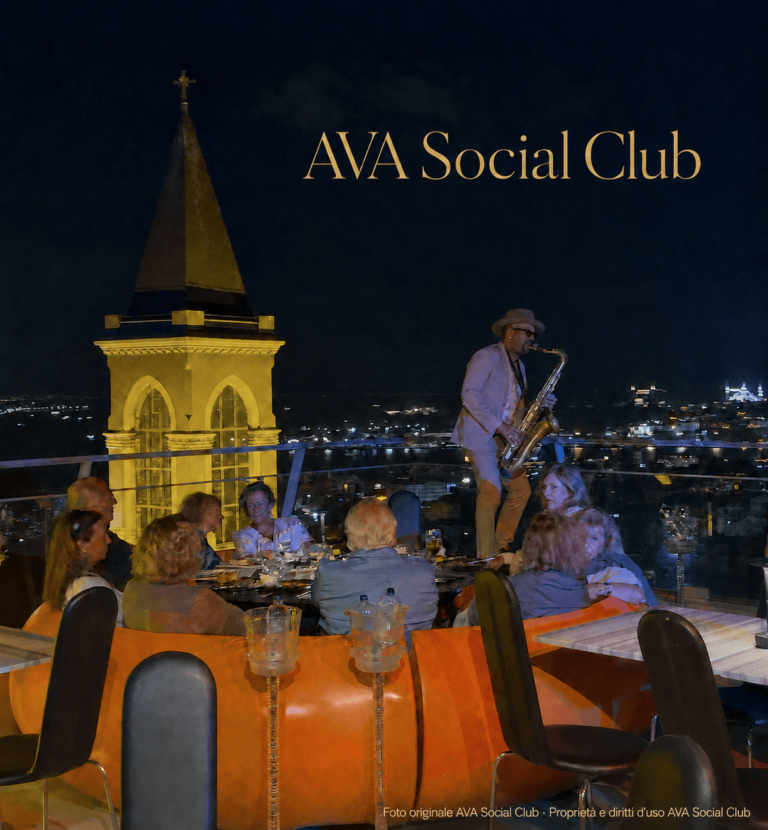
It was created to design social environments and experiences where connection becomes a natural consequence of quality.
At AVA, “being among peers” is not a label. It is a stage of life that calls for:
- quality life
- freedom and respect
- genuine conversations
- comfortable environments
- small groups and human peace
And here lies a key point: AVA recognizes a need that already exists and continues to grow — and translates it into curated, replicable contexts of peer belonging.
6) Gentle curation: intentional, never intrusive
Curating a social context does not mean rigidly selecting people.
It means protecting what makes quality possible: atmosphere, respect, discretion, and coherence.
This is a cultural choice even before it is an organizational one:
less noise, more presence.
7) A new way to begin: simple and progressive
AVA is designed to be entered without pressure. First you understand. Then you join.
Then you participate.
If these words strike a chord with you, there’s no need to convince yourself. Find yourself in AVA