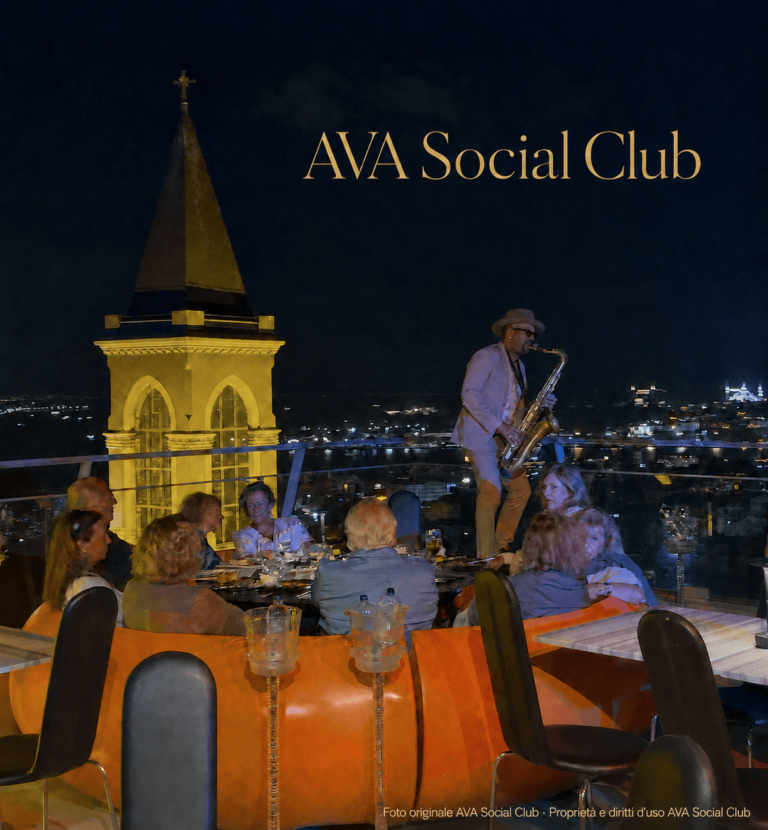




You don’t need to “change your life.” What you need is the right environment — a place where affinity can naturally emerge, without pressure.
Living alone is becoming increasingly common today.
For some, it is a choice. For others, it is a situation that gradually becomes accepted over time. For many, it is simply a natural phase of life.
In any case, many people eventually learn to live with solitude. And at that point, a simple question becomes worth asking: how can we live it well?
Not by denying it, but by transforming it into something more fertile: solitude as a space of freedom, quality, and intention.
The point is not to “fix” something. The point is to find the right context.
1) Solitude is not the problem — the absence of the right context is
Today our lives are more mobile and complex than ever before. Families evolve, friendships change, cities transform, and life rhythms rarely align.
It is therefore possible to be surrounded by people and still feel as if you don’t truly belong anywhere.
Traditional social frameworks — couples, family circles, long-standing groups — are no longer automatic for many people.
So the question becomes more essential:
Where can I find the right social context — places and opportunities — to meet people with whom it truly makes sense to share time and conversation?
2) The paradox: opportunities exist, but they remain superficial
There are plenty of opportunities today: events, courses, groups, trips.
Yet many of them remain on the surface. You meet people, talk, smile… and then everything disperses.
The pattern is familiar:
- you meet, but continuity does not develop
- you talk, but there is no shared ground
- you socialize, yet still feel like a passing presence
And when you return home, an uncomfortable feeling often appears — a subtle emptiness, as if the evening added very little.
Sometimes it brings a quiet question:
Why was I even there?
This is not a lack of interest. It is a lack of the right framework.
3) Meaningful relationships: when social life becomes an adult choice
At a certain point in life, we are no longer looking for “more.” We are looking for better.
Adult social life evolves. People become more selective — not out of closure, but out of awareness.
Old patterns no longer satisfy. A new criterion emerges: quality of time and quality of relationships.
And this is where experiences matter. The right experiences open the mind, stimulate curiosity, and help us grow.
Not to become someone different, but to remain alive — culturally, emotionally, and socially.
At a certain point in life, we are no longer looking for “more.”
We are looking for better.
Adult social life evolves. People become more selective — not out of closure, but out of awareness.
Old patterns no longer satisfy. A new criterion emerges: quality of time and quality of relationships.
And this is where experiences matter. The right experiences open the mind, stimulate curiosity, and help us grow.
Not to become someone different, but to remain alive — culturally, emotionally, and socially.
For this reason, many people are no longer simply looking to “meet new people.”
They are looking for affinity: shared interests, compatible sensitivities, values that do not need constant explanation.
4) Context: the difference between social effort and natural connection
A context is a framework that makes what is difficult suddenly easy.
When the environment is right:
- you don’t need to explain yourself too much
- you don’t need to adapt to noisy social dynamics
- you don’t feel pressure to perform
- you can simply be present
And connection arises naturally — not from effort, but from the right conditions.
5) Being among peers is not about age – it’s about life stage
Being “among peers” does not mean being identical. It means sharing a stage of life.
A similar relationship with time. A more intentional desire for meaningful relationships. A stronger attention to what truly matters.
For this reason, after the age of 55 priorities often change: people seek genuine conversations, respect, freedom, and quality time with others who move at a similar rhythm.
6) AVA: a simple response to a real need
AVA was created for exactly this reason: to transform a growing need into curated and repeatable social contexts where people with genuine affinity can meet naturally.
It is not about filling schedules with activities. It is about rediscovering a place — a context where you can recognize yourself and feel a sense of belonging.
Adult loneliness can become a meaningful and fertile season of life.